
Showing posts with label Featured. Show all posts

Monday, September 9, 2013

Aeroponic Systems and Marijuana

Aeroponic Systems


Aeroponic Systems

Aeroponic systems allow growers to produce great marijuana with quick turnover.


Whether you’re looking for a more reliable system for use in cloning your cannabis crop, or you’re interested in producing the maximum number of clones possible, aeroponic systems are a great resource for the serious grower. Aeroponic systems are especially useful when you want to root clones from a strain that doesn’t usually respond well to traditional cloning methods. Properly managed, most aeroponic systems require little or no oversight after initial setup, and they can produce viable roots in as little as 6 – 8 days.


One of the best aeroponic systems available, and admittedly one of the more expensive, is the EZ Clone system, available from many online retailers including Amazon. The EZ Clone system comes in several sizes, with room for 30, 60 or 120 clones accordingly. For optimum results with the EZ Clone system, be sure to clean it thoroughly between uses and maintain a pH balance of roughly 6.0 – 6.3 for the water / nutrient blend.


The EZ Clone 30 has room for up to 30 clones and comes with a 12 gallon reservoir, so it’s a fairly sizeable setup, and the larger EZ Clone systems come with bigger reservoirs. But if you aren’t ready to invest ~ $250 – $300 in an aeroponic system like the EZ Clone setups, you can still experiment with aeroponics on an affordable scale.


Bloom Brothers Cloner Bucket



Aeroponic Systems

Knowing how to grow marijuana with Aeroponic Systems is a great skill to have.


The Bloom Brothers Cloner Bucket, for instance, comes with everything you need to get started with up to 18 clones in a compact 3.5 gallon bucket, and it costs as little as $65. Cuttings should start showing roots in 5 – 10 days, and the Bloom Bucket comes with neoprene inserts to use in lieu of net pots or other cumbersome materials, as well as a decent pump and 15ml of Clonex rooting gel to help get your clones started on the right track.


Whether you opt for a larger system or a smaller aeroponic bucket or bubbler bucket-style system, the results of aeroponic rooting and even full aeroponic growth through the vegetative and flowering cycles, can be quite rewarding. Certainly, as a method for quickly and reliably establishing robust roots, an aeroponic system seems to win hands-down over its competition.


Remember to use a good rooting gel (Clonex is far and away the most popular) in conjunction with your aeroponic system. While you can certainly get good results from an aeroponic system with no extra help, the rooting gel will speed up root production by an average of 2 – 4 days, depending on your specific circumstances.


Aeroponic Systems and Marijuana

Wednesday, August 7, 2013

Avoiding the Pitfalls of Cannabis Cultivation

6 Pitfalls to Avoid when Cultivating Marijuana


As a new cannabis grower, there’s a lot of things you have to learn and keep in mind at every stage of growth, from seed germination through to harvest, trimming and curing. Quite understandably, it can get to be rather overwhelming, so here’s a quick review of some of the common pitfalls of cannabis cultivation and how you can avoid them.


#1 Don’t Tell ANYONE You Grow Pot


Don’t tell other people: this is the number one pitfall of cannabis cultivation, and it’s sad because it is truly so easy to avoid. It’s easy to get excited when you first start your grow, and you may wish to tell your closest friend(s) or family, but resist this temptation at all costs. Keeping the knowledge of your grow to yourself not only protects you against unwanted disclosure / exposure by other people, but also protects you from theft or being targeted by criminals who may learn about your grow and target your crop as a result.


Over / Under-watering Your Plants


moisturemeterUse a soil moisture meter to measure the moisture content in your soil are available in most garden supply stores, and are a great tool for keeping track of your soil moisture. Under watering will cause your plants to wilt and could even kill them, while over watering will cause waterlogged plants that are more susceptible to rotting and drowning.


Wrong pH Balance


When the pH of your soil is too acidic or too basic, the roots of your cannabis plants can no longer take up and make use of the nutrients in your nutrient blend. If you start to notice issues in your plants’ growth, such as yellowing leaves or signs of nutrient deficiency, do a quick check and make sure the pH of your soil is somewhere between 6.5 – 7.0; this represents a neutral pH zone, ideal for your plants. Use a soil test strips to check your soil levels


Not Enough / Wrong Type of Light


Although you can get away with growing cannabis under fluorescent lights and other weak light sources, your results and yields really won’t compare to the use of professional marijuana grow lights like high pressure sodium (HPS) and metal halide (MH) lights. Metal halide are great bulbs for use during the vegetative stage of growth, while HPS bulbs will give you superior bud growth and yields during flowering. Also make sure that you have enough lumens per square foot; cannabis flourishes with 4,000 – 7,000 lumens of light per square foot but should have an absolute minimum of 3,000 lumens to grow well.


Overheating


The Basics of Marijuana Cultivation

Indoor or outdoor, small or large – learning the basics of marijuana cultivation is the first step in successful growing.


Your plants are sensitive to the temperature in your grow room, just like you are. As a general rule of thumb, spend some time in your grow room and under your grow lights; if you find it uncomfortably hot, then chances are good that your plants are too hot as well. Daytime temperatures for cannabis should stay between 70 – 80 degrees. Hotter temperatures will cause your plants to lose more water, thus they will drink more and can become susceptible to nutrient burn as a result.


Nutrient Burn / Nutrient Deficiency:


While nutrient burn is more common, you can also wind up with nutrient deficiency if you don’t give your crop enough of what it needs. To avoid nutrient burn, always introduce nutrients in very small quantities and gradually increase the amounts. Also, only use nutrients in your water every 2 – 3 times you water, at most. If your plants start showing signs of nutrient burn, stop all nutrients and water them with pure, pH-neutral water.


Avoiding the Pitfalls of Cannabis Cultivation

Ideal Strains for Total Beginners

Ideal Strain


While all cannabis plants are renowned for their hardiness and general resiliency compared to many other plants, it’s still true that some strains are harder to grow than others. So if you’re just starting out, and you want to increase your chances of harvesting a decent crop, or if you’re someone who is notoriously bad with plants, here are some ideal marijuana strains that are practically fool-proof.


Northern Lights


Northern Lights StrainFirst and foremost is Northern Lights #5, commonly referred to simply as Northern Lights, NL, or NL#5. This strain won the Cannabis Cup for several years running and has been a go-to strain for beginners the world over ever since hit the market in 1989.


 Resilient, forgiving of your amateur growing mistakes, and generous in its yield of sticky, dense, resinous buds, you can seldom go wrong with Northern Lights. An indica-dominant hybrid, Northern Lights has a flowering period of 7 – 8 weeks and also produces much less smell compared to other cannabis varieties, making it ideal for indoor stealth-growing. Well-grown plants can be expected to yield as much as an ounce or more per plant, so for a starter’s grow that is a very nice haul.


White Widow


Another exceptional strain for beginners is White Widow. Resistant to bugs and pests, as well as dehydration and nutrient imbalances, White Widow can withstand reasonable mistakes and still produce a worthy crop for your smoking pleasure.


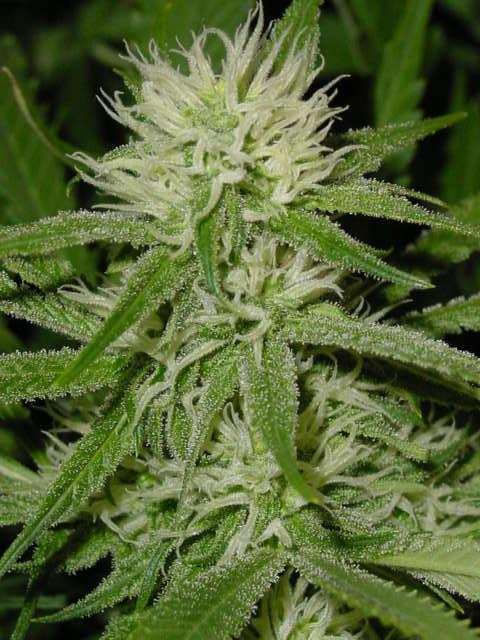
Famed for its dense, resinous buds that are sticky to the touch, White Widow is another hybrid strain that is well-adapted to indoor growth. Properly grown, White Widow will be covered in thick crystals, giving it almost a sugared appearance, and will carry a distinct, lightly-fruity aroma. With high THC-content on average, White Widow is a good strain for the beginner who wants to ensure a stronger, more potent crop.


Ideal flowering time for this strain is generally 8 – 10 weeks, and as a hybrid strain with strong indica characteristics, you can count on White Window to remain manageable throughout its growth cycle. Be prepared for strong scents during flowering, generous yields under decent growing circumstances, and a potent high when you finally cure and smoke your bud.


Ideal Strains for Total Beginners

Monday, August 5, 2013

How to Root Stubborn Marijuana Plants

Some cannabis plants may seem to resist all your attempts to clone them. This can be frustrating, particularly for breeders who use a lot of clones or who are accustomed to having easy success with their cloning techniques. Before you tear your hair out, though, just accept that some strains just give you a hard time, but they can be tamed.


One popular method of rooting stubborn clones is to use the good old-fashion potato graft. To use the potato graft, simply prepare your trimming as you usually would. Select a potato that has at least 2 or 3 eyes, and carve a small hole in it for the cutting. Once you’ve prepared it properly and used the rooting hormone of your choice, insert your cutting into the potato and plant as normal.


The potato graft will keep your cutting moist, and provide it with necessary nutrients to encourage root growth. As your plant grows, the potato will either be used up entirely or may start to grow itself. If you notice potato leaves growing around the base of your cannabis plant, simply trim them away.


Potato grafting also works with older, harder or generally woodier stems and stalks. To root a woodier, harder stalk, you should cut it at roughly 45 degrees and also scrape away the outer bark / skin of the cutting for about ½ inch of the stem. This will expose more of the inner bark (where the cells for root growth are located) to the rooting hormone and soil.


Another method for harder-to-root clones is known as air layering. It requires a bit more finesse and some practice, but the results are that when you take your clone from your plant, it will literally already be a plant on its own, complete with roots and ready for planting.


To develop roots via air layering, select the limb you wish to clone. Choose a spot under a node, just like you would for regular cutting, and prepare the intended root-site by using a sterile razor blade or another suitable sharp object to carefully cut the outer layer of bark off a ½ – 1 inch section of the branch. The goal here is to remove the outer layer of bark, known as the phloem, without damaging the inner layer of bark known as the xylem.


You can also scrape the outer bark away, but scraping is more likely to cause damage to the inner bark, including the xylem and the inner cambium where the roots will grow from. Once the root-site is prepared, apply your rooting aid of choice and then attach a rock wool cube, or secure a pocket or soil or peat moss around the wound site. Keep your rooting area moist and breathable, and roots should form within 1 – 2 weeks at which time you can cut the new clone from the mother plant and put it directly into soil for further growth.


How to Root Stubborn Marijuana Plants