Showing posts with label growing marijuana. Show all posts

Monday, August 19, 2013

Containing the Skunk: How to Decrease Marijuana Smell

Decrease Marijuana Smell in Your Grow Room


Smell is the number one giveaway for your indoor grow, so you should take precautions to decrease marijuana smell associated with your grow.


Depending on what strain you choose to grow, the smell coming from your grow can vary from mild to overwhelming. More people are caught, and their grows busted, simply because someone walking past on the street smelled their plants than for any other reason. So naturally you should do everything you possibly can to contain and eliminate any smell long before it reaches the street outside.


That means you need a good air-purifying system, and the fact is that charcoal filters usually don’t cut it. While you might be able to get away with activated charcoal filters for a very small grow area, such as a closet set-up, the fact is that if you have more than a few plants they will produce so much smell that your filter is overwhelmed.


This requires the use of more stringent air-purification, which is where ozone filtration comes in. A good ozone filter will totally strip and cleanse the air, leaving no discernible trace of your growing plants. The problem is that ozone filtration systems can get expensive to set-up and to maintain, so you’ll have to decide how the benefits weigh against the cost for yourself.


The Importance of Good Air Circulation


Decreasing Marijuana Smell

Good air circulation is vital in decreasing marijuana smell.


Maintaining good air circulation is also vital to the health of your plants. While they are in the vegetative stage, setting up an oscillating fan to blow air through your plants can do wonders to strengthen the stem and other vegetative growth. The fan will mimic natural wind currents, and in response to the mild stress, the plant will strengthen its stalk and become more rigid, and is therefore capable of bearing a heavier load of bud during the flowering stage.


Finally, don’t try to decrease marijuana smell with incense, perfumes or scented sprays like Lysol. These methods absolutely do not work; all you do is make it smell like whatever you sprayed plus your plants, and no one on your block is fooled. So don’t mess around, get yourself some decent air filtration, you’ll save yourself a world of trouble.


Containing the Skunk: How to Decrease Marijuana Smell

Marijuana Nutrition: Macro & Micro Nutrients

Understanding Marijuana Nutrition


To grow the best marijuana, you need a good understanding of marijuana nutrition. You will also need a good nutrient mix with a blend of the macro- and micro-nutrients your plants need. There are 6 macro-nutrients and 6 main micro-nutrients that your plant will need, depending on its stage of growth, to produce the best bud. Understanding the basics of cultivation is vital, and marijuana nutrition is one of the most important aspects of growing marijuana.


Macro-nutrients:


Marijuana Nutrition

Marijuana Nutrition is an important aspect of the cultivation process.


  • Nitrogen (N) is needed to produce chlorophyll (the green pigment of leaves), which the plant needs for photosynthesis; nitrogen is a key compound during the vegetative stage since it promotes the development of broad, leafy foliage


  • Phosphorous (P) is absolutely essential for proper flowering, it is also used by the plant for photosynthesis, root development and as an aid in using nitrogen


  • Potassium (K) is integral for the plant’s photosynthesis (the process of turning light into energy), and the creation of proteins and carbohydrates; potassium is also used by the plant to fight diseases and it is integral to the movement of fluid throughout the plant


  • Calcium (Ca) is used to build cell walls and to facilitate new growth, especially in the roots, it is also used in some enzyme reactions by the plant


  • Sulfur (S) is used by the plant in enzyme and amino acid production


  • Magnesium (Mg) is essential to form chlorophyll and is also used to make certain enzymes, magnesium also helps with phosphorous uptake by the plant


Micro-nutrients:


  • Iron (Fe) is used by the plant to make chlorophyll and aid with some enzymes


  • Boron (B) is vital to water uptake, seed production and cell formation in your plant


  • Zinc (Zn) is used by the plant to activate certain enzyme reactions


  • Manganese (Mn) is used in chlorophyll production and in many enzyme reactions


  • Copper (Cu) is used in building strong stems and branches, as well as cell growth


  • Molybdenum (Mo) is used in the production of enzymes and in creation of proteins


Commercial and Natural Fertilizers


Marijuana Nutrition

If you fail to pay attention to marijuana nutrition, your plants could suffer.


There are many commercial fertilizers available to choose from, including liquid and powder forms. Most fertilizers will be marked with a percentage of N-P-K. The N-P-K stands for Nitrogen, Phosphorous and Potassium, the three most important macro-nutrients. There are also specialized fertilizers available specifically for vegetative growth and blooming.


For the fans of doing all things the organic way, you have alternatives available to you for nutrients as well. One great marijuana nutrition option is rotted horse manure, especially if you are growing outdoors. Another wonderful option is worm casings or even bat guano. These are great to make sure your marijuana nutrition is top-notch.


Natural fertilizers often release nutrients over a longer period of time, so you don’t have to fertilize as often. The downside is that you may need to do some personal experimentation to get the ratios just perfect, and because the nutrients are released more slowly it will take longer to correct nutrient deficiencies with natural fertilizers. On the upside, nutrient burn is less likely.


Marijuana Nutrition: Macro & Micro Nutrients

Saturday, August 10, 2013

CBD Production vs. THC Production

Understanding CBD and THC Production


Although research has been limited by the ongoing illegality and prohibition of cannabis, decades of anecdotal evidence and an increasing number of scientific studies have demonstrated that cannabis THC production has immense potential as a healing and medicinal agent.


While THC is known to be the main psychoactive compound in marijuana, and has been shown to have neuroprotective effects of its own, there are many patients who do not like the ‘high’ feeling that accompanies THC. Unfortunately for such patients, most cannabis has been selectively bred and grown for decades to produce higher THC content.


In a marijuana culture of recreational use, as opposed to medicinal use, it was easy for breeders and growers to forget about what else might be in their plants. With the increasing use of cannabis as a legitimate medicinal herb by patients suffering from chronic pain, inflammatory conditions, cancer treatments, HIV and a host of other ailments, however, the value of the other cannabinoids has been receiving more attention and research.


Understanding CBD andTHC Production

Understanding CBD andTHC Production


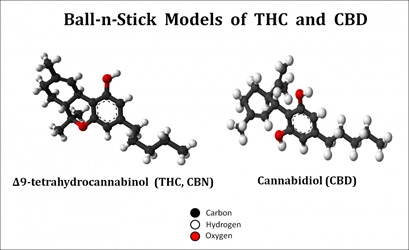
The most well-known and actively researched cannabinoid (other than THC) is Cannabidiol (CBD). While research is ongoing, CBD has been


shown to have marked anti-inflammatory affects and strains that have long been popular among patients with chronic back pain, missing, slipped or herniated discs and even multiple sclerosis are now being tested and found to contain higher level of CBD than average (anywhere from 4 – 12% or more).


Some of the marijuana strains that are currently being developed and have good potential for producing high-CBD containing buds are:


  •  Sour Tsunami is a hybrid with Sour Diesel and NYC Diesel genetics, among others, that has been cultivated by the California-based grower Lawrence Ringo over the last several years. Considered to be a stable high-CBD strain, starting your grow with Sour Tsunami seeds will give you roughly 1 in 4 plants with high CBD content (10 – 12% or more).


  • Jamaican Lion is the beloved strain of another California grower known as Shadrock. With more than a half a dozen tests done on it, Jamaican Lion is known to reliably produce 8 – 9% CBD with anywhere from 4 – 7% THC content based on harvest time. Despite its high CBD content, JL is a sativa-dominant strain that is good for daytime use.


  • Cannatonic is a strain that is available as seeds from Resin Seeds in Barcelona, and it presents a bit of a mixed bag of goodies. With at least 4 distinct phenotypes, the plants you grow from seed can end up being very high in CBD (11 – 13%) with about half as much THC, or they can turn out at super sativas with hardly any CBD, but 20%+ THC.


Since testing for additional cannabinoid content is still a fairly new developing, growers and breeders are only beginning to take advantage of this technology. As research into cannabis continues and more advanced testing methods are established, there is no doubt that breeders and cultivators all over the world will begin breeding strains for highly specific traits.


CBD Production vs. THC Production

Wednesday, August 7, 2013

Ideal Strains for Total Beginners

Ideal Strain


While all cannabis plants are renowned for their hardiness and general resiliency compared to many other plants, it’s still true that some strains are harder to grow than others. So if you’re just starting out, and you want to increase your chances of harvesting a decent crop, or if you’re someone who is notoriously bad with plants, here are some ideal marijuana strains that are practically fool-proof.


Northern Lights


Northern Lights StrainFirst and foremost is Northern Lights #5, commonly referred to simply as Northern Lights, NL, or NL#5. This strain won the Cannabis Cup for several years running and has been a go-to strain for beginners the world over ever since hit the market in 1989.


 Resilient, forgiving of your amateur growing mistakes, and generous in its yield of sticky, dense, resinous buds, you can seldom go wrong with Northern Lights. An indica-dominant hybrid, Northern Lights has a flowering period of 7 – 8 weeks and also produces much less smell compared to other cannabis varieties, making it ideal for indoor stealth-growing. Well-grown plants can be expected to yield as much as an ounce or more per plant, so for a starter’s grow that is a very nice haul.


White Widow


Another exceptional strain for beginners is White Widow. Resistant to bugs and pests, as well as dehydration and nutrient imbalances, White Widow can withstand reasonable mistakes and still produce a worthy crop for your smoking pleasure.


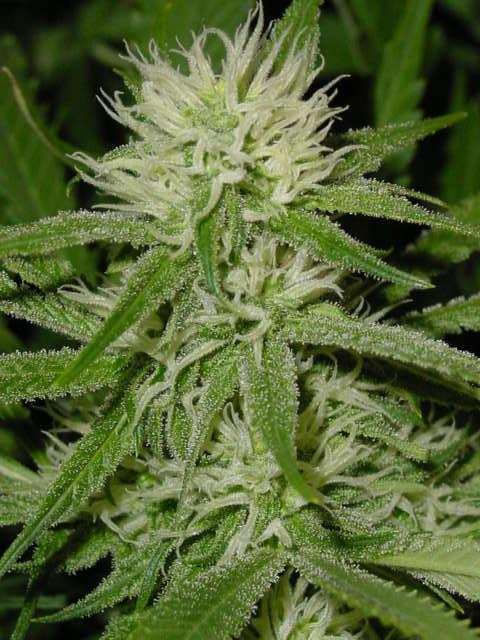
Famed for its dense, resinous buds that are sticky to the touch, White Widow is another hybrid strain that is well-adapted to indoor growth. Properly grown, White Widow will be covered in thick crystals, giving it almost a sugared appearance, and will carry a distinct, lightly-fruity aroma. With high THC-content on average, White Widow is a good strain for the beginner who wants to ensure a stronger, more potent crop.


Ideal flowering time for this strain is generally 8 – 10 weeks, and as a hybrid strain with strong indica characteristics, you can count on White Window to remain manageable throughout its growth cycle. Be prepared for strong scents during flowering, generous yields under decent growing circumstances, and a potent high when you finally cure and smoke your bud.


Ideal Strains for Total Beginners

Monday, August 5, 2013

How to Root Stubborn Marijuana Plants

Some cannabis plants may seem to resist all your attempts to clone them. This can be frustrating, particularly for breeders who use a lot of clones or who are accustomed to having easy success with their cloning techniques. Before you tear your hair out, though, just accept that some strains just give you a hard time, but they can be tamed.


One popular method of rooting stubborn clones is to use the good old-fashion potato graft. To use the potato graft, simply prepare your trimming as you usually would. Select a potato that has at least 2 or 3 eyes, and carve a small hole in it for the cutting. Once you’ve prepared it properly and used the rooting hormone of your choice, insert your cutting into the potato and plant as normal.


The potato graft will keep your cutting moist, and provide it with necessary nutrients to encourage root growth. As your plant grows, the potato will either be used up entirely or may start to grow itself. If you notice potato leaves growing around the base of your cannabis plant, simply trim them away.


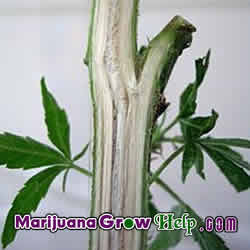
Potato grafting also works with older, harder or generally woodier stems and stalks. To root a woodier, harder stalk, you should cut it at roughly 45 degrees and also scrape away the outer bark / skin of the cutting for about ½ inch of the stem. This will expose more of the inner bark (where the cells for root growth are located) to the rooting hormone and soil.


Another method for harder-to-root clones is known as air layering. It requires a bit more finesse and some practice, but the results are that when you take your clone from your plant, it will literally already be a plant on its own, complete with roots and ready for planting.


To develop roots via air layering, select the limb you wish to clone. Choose a spot under a node, just like you would for regular cutting, and prepare the intended root-site by using a sterile razor blade or another suitable sharp object to carefully cut the outer layer of bark off a ½ – 1 inch section of the branch. The goal here is to remove the outer layer of bark, known as the phloem, without damaging the inner layer of bark known as the xylem.


You can also scrape the outer bark away, but scraping is more likely to cause damage to the inner bark, including the xylem and the inner cambium where the roots will grow from. Once the root-site is prepared, apply your rooting aid of choice and then attach a rock wool cube, or secure a pocket or soil or peat moss around the wound site. Keep your rooting area moist and breathable, and roots should form within 1 – 2 weeks at which time you can cut the new clone from the mother plant and put it directly into soil for further growth.


How to Root Stubborn Marijuana Plants